In collaboration with Mark Eckstrand (glass), Mindaugas Miselis, Felix Bonowski (electronics), Outi Wahlroos, Alessandro Volpato, Klaus Fritze (experiments)
An installation Love Letters to My Fellow Human narrates the profound impact of global warming and ecological degradation on our planet. At the heart of this project lies the figure of the artificial jellyfish, a poignant symbol of both the beauty and fragility of the oceans, crafted from plastic and electronic components. Through a series of participatory events and experiments, the project seeks to provoke critical reflection on the changing natural environment, the implications of uncontrolled technological intervention, and the coexistence of humans, robots, and non-human species.
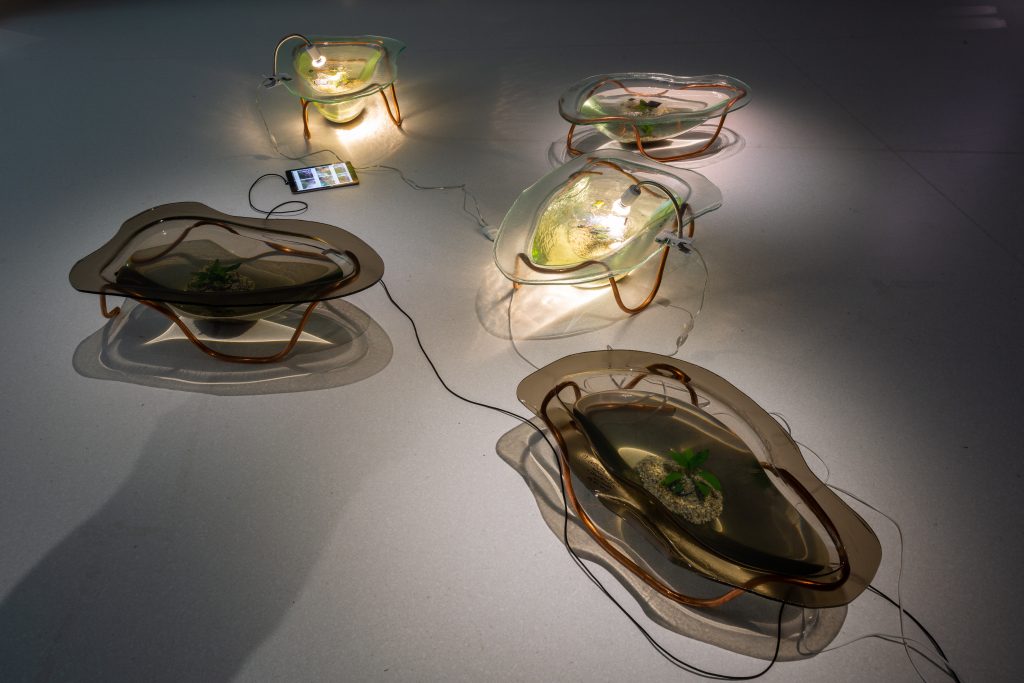
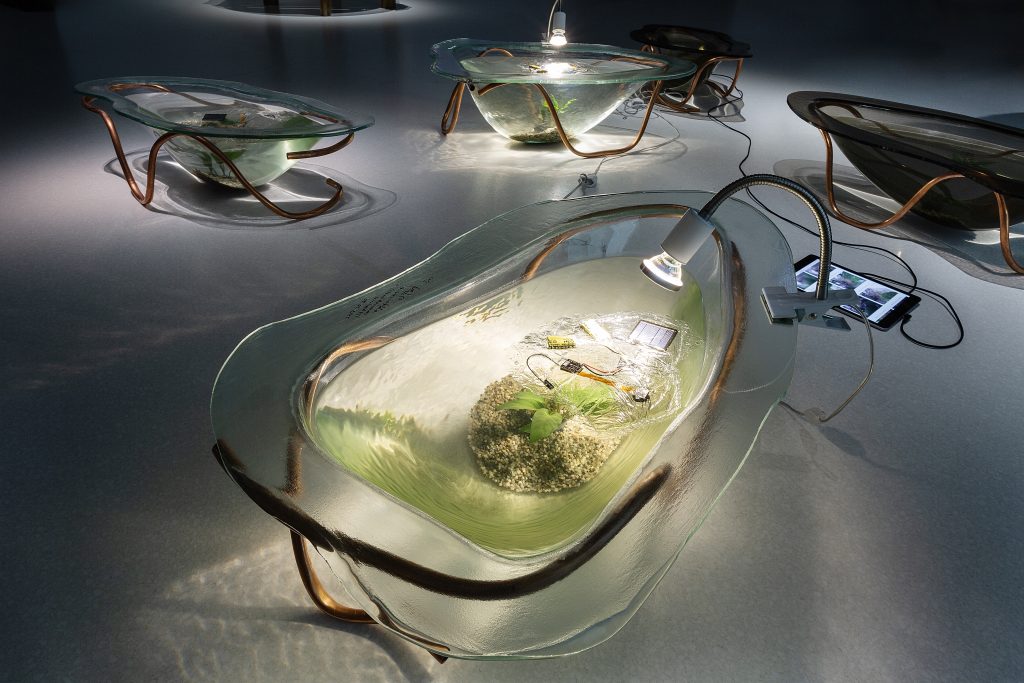
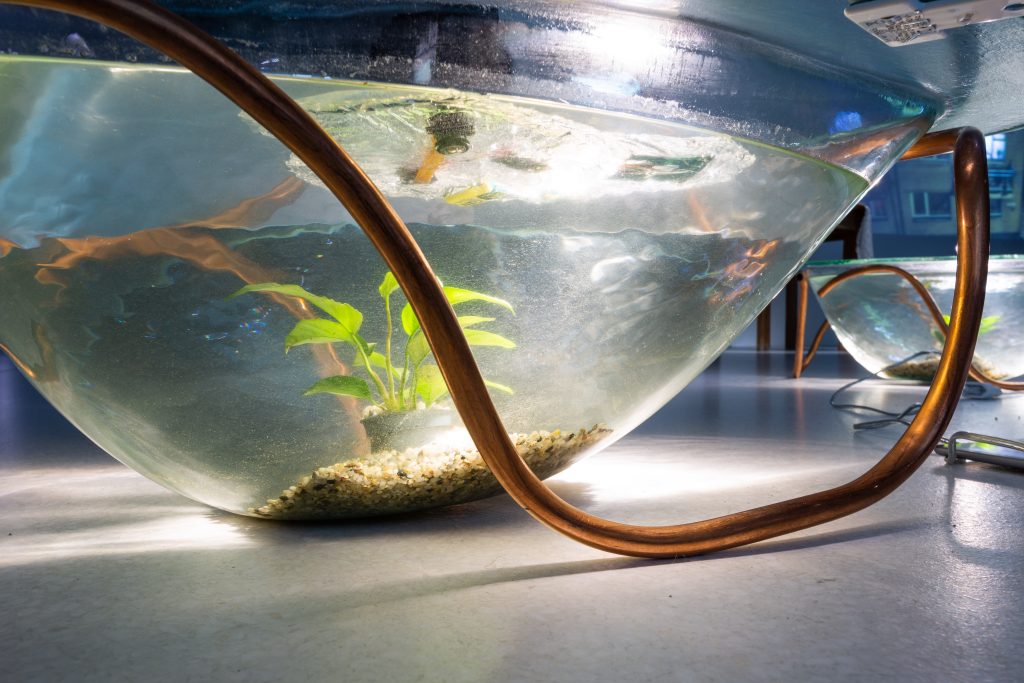
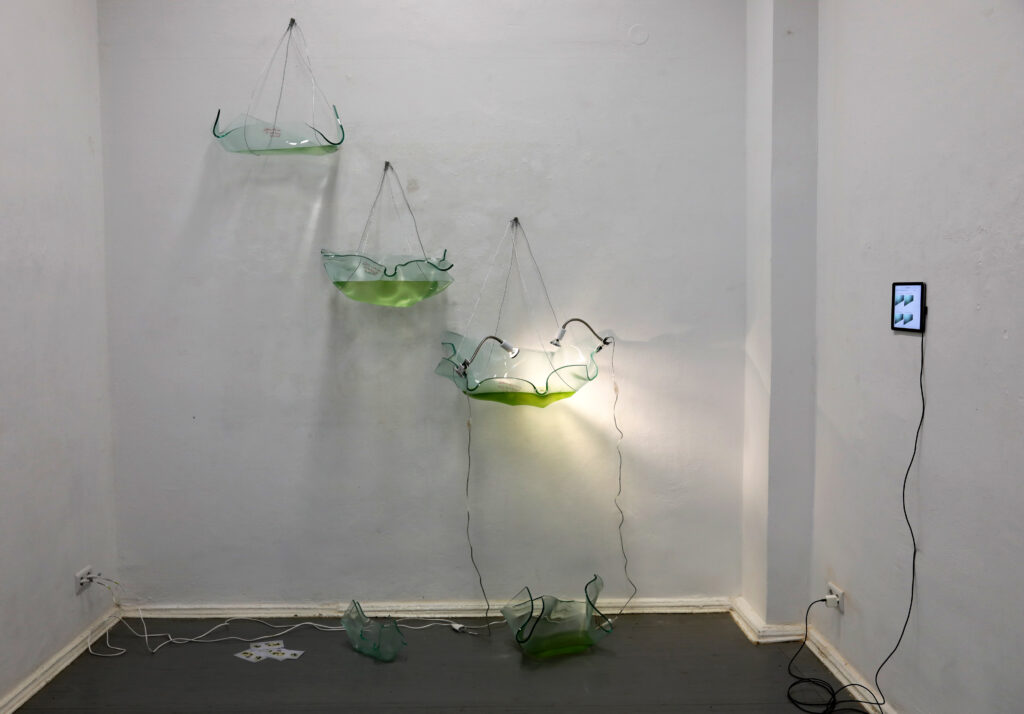
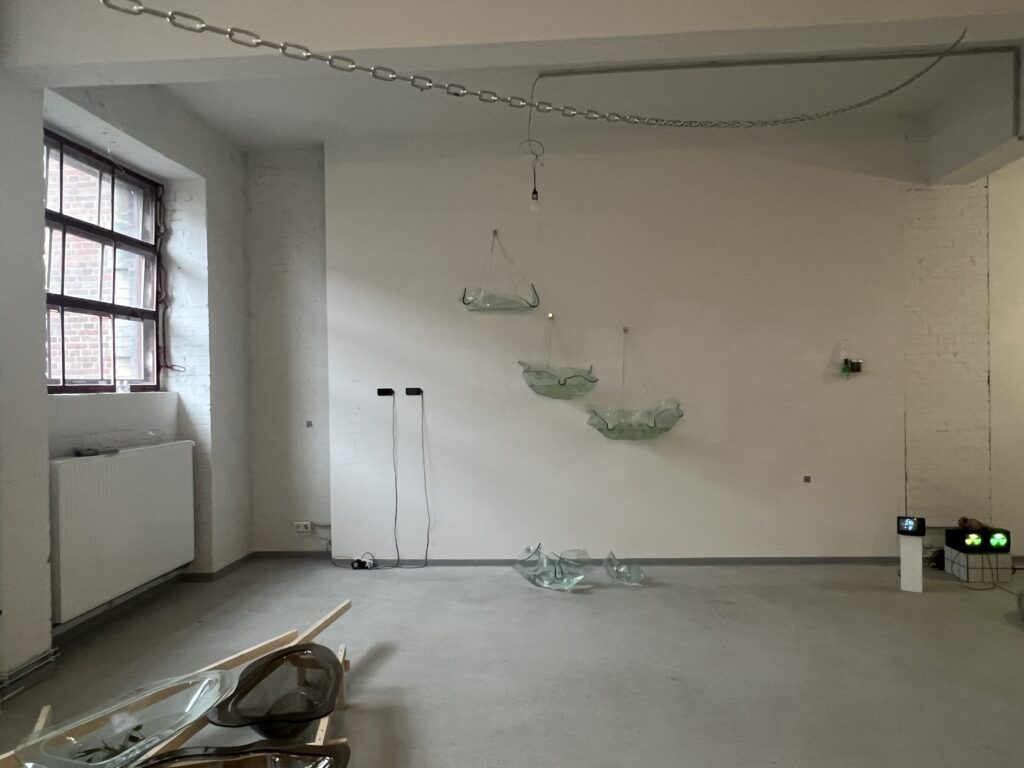
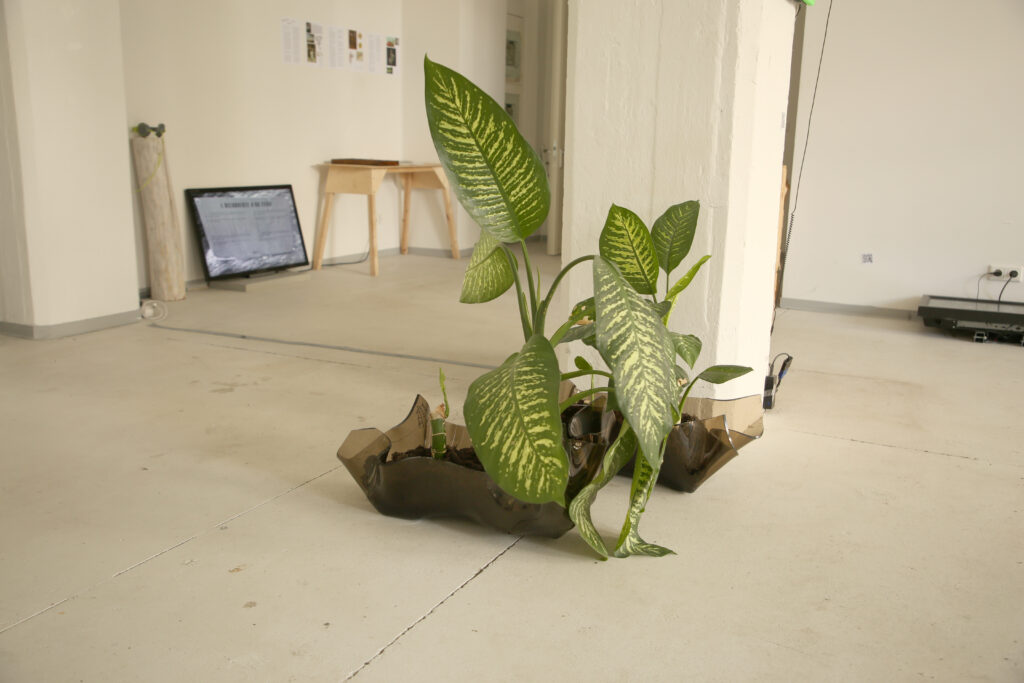
The installation consists of a series of interconnected artworks, including plastic objects, glass objects, videos, sketches, manuals, a rainwater garden, and facilities for work. The elements of the installation are selected based on the specific context, with some components omitted as appropriate. In the introduction video, Puddle Garden, Artificial Jellyfish and Cascade Garden are featured at the Centre for Non-Machines Research in Athens.
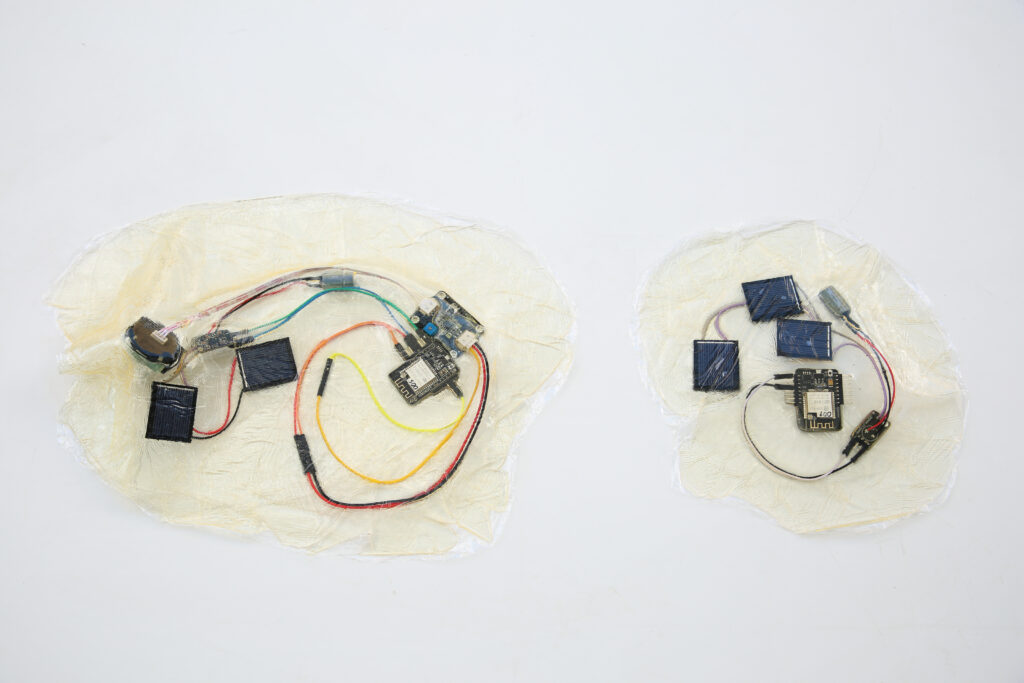
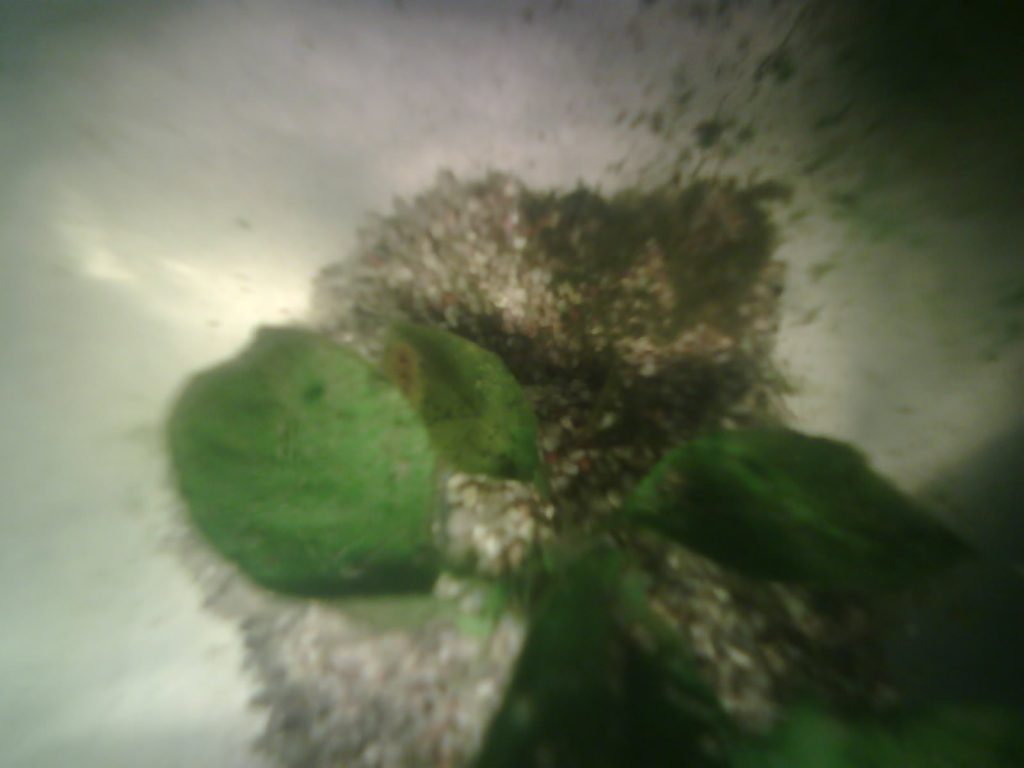
Artificial Jellyfish is a series of objects designed to drift in the water or sit elsewhere on the ground. The chosen design reminds us of plastic contaminants in our environments. While drifting in waters or sitting elsewhere on the ground, the jellyfish narrates the profound impact of global warming and ecological degradation on our planet. By harnessing the power of solar cells, these artificial jellyfish continuously capture photos or sense other environmental parameters in real-time, offering viewers a glimpse into the beauty and vulnerability of our planet.
The project draws inspiration from a diverse array of sources, including the evocative narratives found in messages enclosed within bottles washed ashore, as well as historical precedents such as the “LoveLetters” program developed by software engineer Christofer Stanchey. Furthermore, the artificial jellyfish references the potential of ecological robots – so called drifters in oceanography – to facilitate scientific inquiry and deepen our understanding of marine dynamics.
Artworks
Artificial Jellyfish
Cascade Garden
Puddle Garden
Plant Containers
Experiment: Daphnia Test
Experiments
Artworks are presented alongside scientific experiments to analyze environments and their transformations influenced by various factors, such as fertilizers, temperature, and mycelia.
Experiment #1
Experiment #2
Experiment #3
Experiment #4
Related Media